


Dentures are designed to restore your smile and improve everyday functions like eating and speaking. However, removable dentures and partials can occasionally become dislodged, creating the risk of accidental swallowing or aspiration.
While these incidents are uncommon, they can lead to serious complications depending on where the dental appliance travels or becomes lodged. Understanding the warning signs, possible risks, and appropriate treatment can help you know what to do if a denture suddenly goes missing.
Key Takeaways
- Swallowing a denture is uncommon, but it can cause serious complications if it becomes lodged or damages the digestive tract.
- Symptoms may include difficulty swallowing, throat or chest pain, coughing, choking, abdominal pain, vomiting, or bleeding.
- Seek prompt medical evaluation if a denture is missing and may have been swallowed, even if symptoms are mild.
- There is no safe DIY method for removing a swallowed denture; treatment may involve endoscopy, laryngoscopy, observation, or surgery depending on its location.
- Loose or poorly fitting dentures should be evaluated by a dentist to reduce the risk of future dislodgement.
Is It Possible to Swallow Your Dentures?
Yes, it is possible to swallow your dentures, although it’s rare. This is more likely to occur when removable dentures or partial dentures become loose, damaged, or poorly fitted. Trauma, sedation, or general anesthesia may also increase the risk of a dental prosthesis becoming dislodged.
A loose denture can be ingested, meaning it enters the esophagus and digestive tract, or aspirated, meaning it enters the airway or lungs. Both situations can lead to serious complications, so prompt medical evaluation is important if a denture is missing and cannot be located.
Swallowed Denture Symptoms
Symptoms depend on where the denture becomes lodged. According to a study of 34 patients with swallowed dentures, difficulty swallowing was the most common symptom, although symptoms can range from mild discomfort to serious complications.
Common warning signs may include:
- Difficulty or pain when swallowing
- Throat, neck, or chest discomfort
- Coughing or choking
- Excessive saliva
- Trouble breathing
- Fever or signs of infection
- Abdominal pain or vomiting if the denture travels farther into the digestive tract
- Bleeding in more serious cases
Some patients may have few symptoms initially, so a missing denture that may have been swallowed should still be medically evaluated.
What to Do if You Swallow Your Dentures
If you suspect that you have swallowed a denture, seek prompt medical evaluation, even if you do not have immediate symptoms. A denture can become lodged or cause injury without producing obvious signs right away.
- Call emergency services immediately if you have trouble breathing, choking, severe chest or abdominal pain, significant bleeding, or cannot swallow saliva.
- Do not induce vomiting or try to remove the denture yourself.
- Tell the medical team what type of denture or dental appliance is missing, if known.
Doctors may use imaging and procedures such as endoscopy to determine where the denture is located. Depending on its position and whether it is causing blockage or tissue damage, treatment may involve endoscopic removal, observation in selected cases, or surgery.
According to the American Society for Gastrointestinal Endoscopy (ASGE), treatment urgency depends on factors such as the object’s location, size, shape, and the patient’s symptoms. Sharp objects lodged in the esophagus require emergency removal.
Delaying evaluation can increase the risk of complications such as obstruction, perforation, infection, or internal bleeding.
How Are Swallowed Dentures Removed?
There is no safe at-home method for removing a swallowed denture. Once doctors determine its location, treatment may include:
- Laryngoscopy for dentures lodged high in the throat.
- Endoscopy to locate and remove dentures from the esophagus or upper digestive tract.
- Medical observation in carefully selected cases where the object has traveled farther into the digestive tract and is considered safe to monitor.
- Surgery when the denture cannot be removed endoscopically or has caused complications such as perforation.

A 2023 case report and literature review found that endoscopic removal can be effective for dentures lodged in the esophagus, while surgery may be necessary when endoscopic removal is not possible, or serious complications have developed.
Importantly, a medical professional should recommend observation only after assessing the denture; it should not be treated as a DIY “wait and see” approach.

Need a Dentist?
ENHANCE YOUR ORAL HEALTH, CONTACT OUR MIAMI OFFICE TODAY!!
Can Swallowed Dentures Be Seen on an X-Ray?
Not always. Some dentures, particularly those made primarily from acrylic materials, may be difficult to detect on a standard X-ray. Metal clasps or other radiopaque components can make a dental prosthesis easier to identify, but an initial X-ray may not always show its exact location.
If a swallowed denture is strongly suspected despite an inconclusive X-ray, doctors may use other imaging methods or procedures such as endoscopy to locate it. This is another reason why a missing denture should not be dismissed simply because it does not appear on an initial scan.
What Happens If You Swallow a False Tooth?

In some cases, a swallowed dental prosthesis may pass through the gastrointestinal tract without causing complications. However, whether it can safely pass depends on its size, shape, location, and whether it has sharp edges or metal components. Medical evaluation is important before assuming that a swallowed denture will pass on its own.
If the denture becomes lodged or sharp edges press against intestinal walls, it can result in serious complications such as bowel obstruction or small bowel perforation.
In such cases, surgical intervention may be necessary to retrieve the object and repair internal damage. A 2004 report in the Journal of the Royal Society of Medicine described a 46-year-old man who developed difficulty swallowing and a sore throat after unknowingly swallowing a denture.
A standard chest X-ray did not reveal the prosthesis, but further examination with rigid oesophagoscopy, a procedure involving a camera passed down the throat, found it lodged in the esophagus. The case highlights why additional evaluation may be necessary when a swallowed denture is suspected but cannot be seen on an initial X-ray.
Cases of Swallowed Dentures
Adults are less likely than children to swallow foreign objects, but accidental denture ingestion does occur. A 2012 review published in Deutsches Ärzteblatt reported that dentures accounted for approximately 4% to 18% of swallowed foreign bodies in adults.
Published case reports show that outcomes can vary significantly. In one case reported in The Lancet, a woman accidentally swallowed her dentures while eating. Doctors monitored the prosthesis as it traveled through her digestive tract until it passed without further intervention.
More serious complications have also been reported when swallowed dentures remain undetected, including bleeding, obstruction, and gastrointestinal perforation. These cases show why a missing denture should be medically evaluated rather than assuming it will pass safely on its own.
How Can You Reduce the Risk of a Loose Denture?
A properly fitted denture should feel comfortable and remain stable during normal speaking and eating. However, dentures can lose their fit over time as the mouth changes or the appliance becomes worn. Gallardo Periodontics notes that changes in bone structure may eventually make relining or other adjustments necessary.
To help prevent problems with a loose or damaged denture:
- Have the fit checked if the denture begins slipping or moving.
- Do not continue wearing a denture that is cracked, damaged, or uncomfortable.
- Have damaged dentures professionally evaluated rather than attempting an at-home repair.
- Ask your dentist whether a reline, repair, replacement, or another tooth-replacement option is appropriate.
Are Dental Implants an Alternative to Dentures?
Dental implants may be an option for patients who want a more stable tooth-replacement solution, but they are not automatically the right choice for everyone. Traditional full and partial dentures remain appropriate options for many patients, while implants can also be used to support a bridge or an implant-supported denture.
Unlike conventional removable dentures, dental implants are placed in the jawbone and provide a stable foundation for replacement teeth. Implant-supported dentures are anchored to implants, which can provide greater stability than a traditional removable denture.
Whether implants are appropriate depends on factors such as overall health, oral health, available jawbone, and the patient’s individual treatment needs. A dental evaluation can help determine whether conventional dentures, implant-supported dentures, or another form of dental implant treatment is the better option.
Real Patient Results
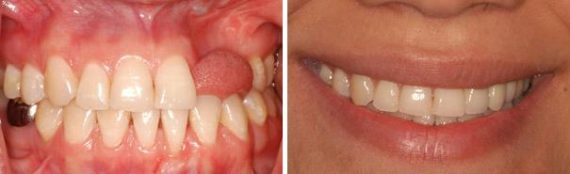
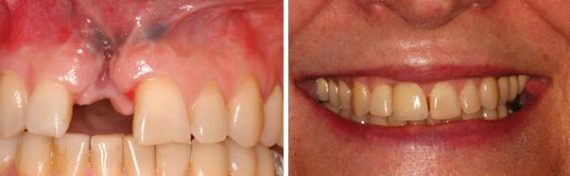
* All patients are unique and individual results may vary.
When to Consider a Dental Implant Consultation
If loose or poorly fitting dentures are becoming a recurring problem, a dental evaluation can help determine whether a reline, replacement denture, or implant-supported option may provide better stability.
Dr. John Paul Gallardo, DDS, PA, is South Florida’s leading periodontist and implant specialist. With over 30 years of experience, he is known for his advanced techniques and meticulous approach. At Gallardo Periodontics and Implant Dentistry, we offer cutting-edge technology and IV conscious sedation for a safe and comfortable experience. Call us at 305-447-1447 or visit our contact page to schedule a consultation.
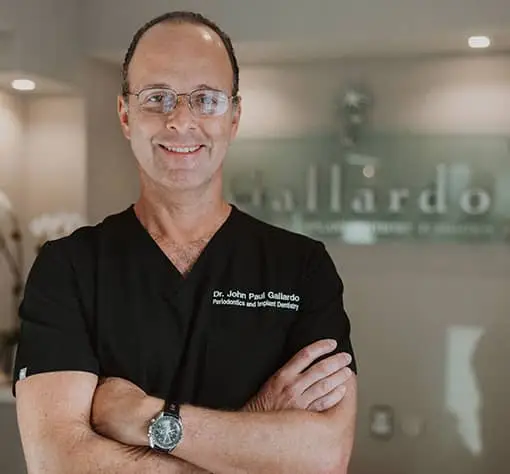
ABOUT THE DOCTOR
Dr. John Paul Gallardo, DDS, PA
Periodontist and Dental Implant Specialist in Miami
Dr. John Paul Gallardo is a periodontist and dental implant specialist in Miami with more than 30 years of experience treating gum disease, placing dental implants, and managing complex periodontal cases. He earned his Doctor of Dental Surgery degree from New York University College of Dentistry in 1991 and later completed advanced graduate studies in Periodontics and Dental Implants at Boston University, where he earned a C.A.G.S. degree.
Dr. Gallardo has also lectured nationally and internationally to dentists and dental hygienists on topics related to gum disease and implant dentistry. He has been interviewed by the Miami Herald and Univision as an expert contributor on oral health topics.
Dr. Gallardo’s Credentials Include:
- Doctor of Dental Surgery (DDS) — New York University College of Dentistry
- Advanced Graduate Studies in Periodontics and Dental Implants — Boston University
- C.A.G.S. Degree — Boston University
- 30+ Years of Experience
- Outstanding Resident of the Year — V.A. Medical Center General Practice Residency Program
- National and International Lecturer on periodontics and implant dentistry
Expertise Areas:
Periodontics, Gum Disease Treatment, Dental Implants, Complex Periodontal Care