
John Paul Gallardo, D.D.S., P.A., Periodontics and Implant Dentistry
From Our Office
to Yours….
Scaling, root planing and conventional pocket reduction remain the foundational treatment for periodontitis. However, residual pockets, incomplete bacterial removal and patient discomfort have led to the development of adjunctive approaches to accomplish the same objectives.
With the increasing numbers of implants placed, their vulnerability to peri-implant disease — which parallels tooth-borne disease — is similarly increasing, thus making the need for more predictable and effective therapies more critical.
One adjunctive approach to periodontal therapy has been the adoption of laser technology, which has emerged as a promising new tool in the armamentarium of treatment choices as a less invasive, less painful and highly effective alternative treatment of both periodontitis and peri-implantitis.
In this current issue of The PerioDontaLetter, we review how various lasers are increasingly being utilized to treat both periodontal and peri-implant disease.
As always, we welcome your comments and suggestions.
Laser Periodontal Therapy — An Alternative to Conventional Flap and Osseous Surgery
The United States Centers for Disease Control and Prevention (CDC) reports that half of all Americans age 30 and older, and more than 70 percent of Americans 65 and older, have periodontal disease.
Globally, severe periodontitis is the sixth most prevalent condition, affecting 743 million people worldwide.
The primary standards of care are scaling and root planing (SRP) and pocket reduction surgery, both of which are effective in many cases.
However, these procedures have recognized limitations, including deep pockets, furcation areas and complex root anatomy which can hinder complete biofilm removal, residual inflamed epithelium, patient discomfort, and post-operative sensitivity which may reduce patient compliance.

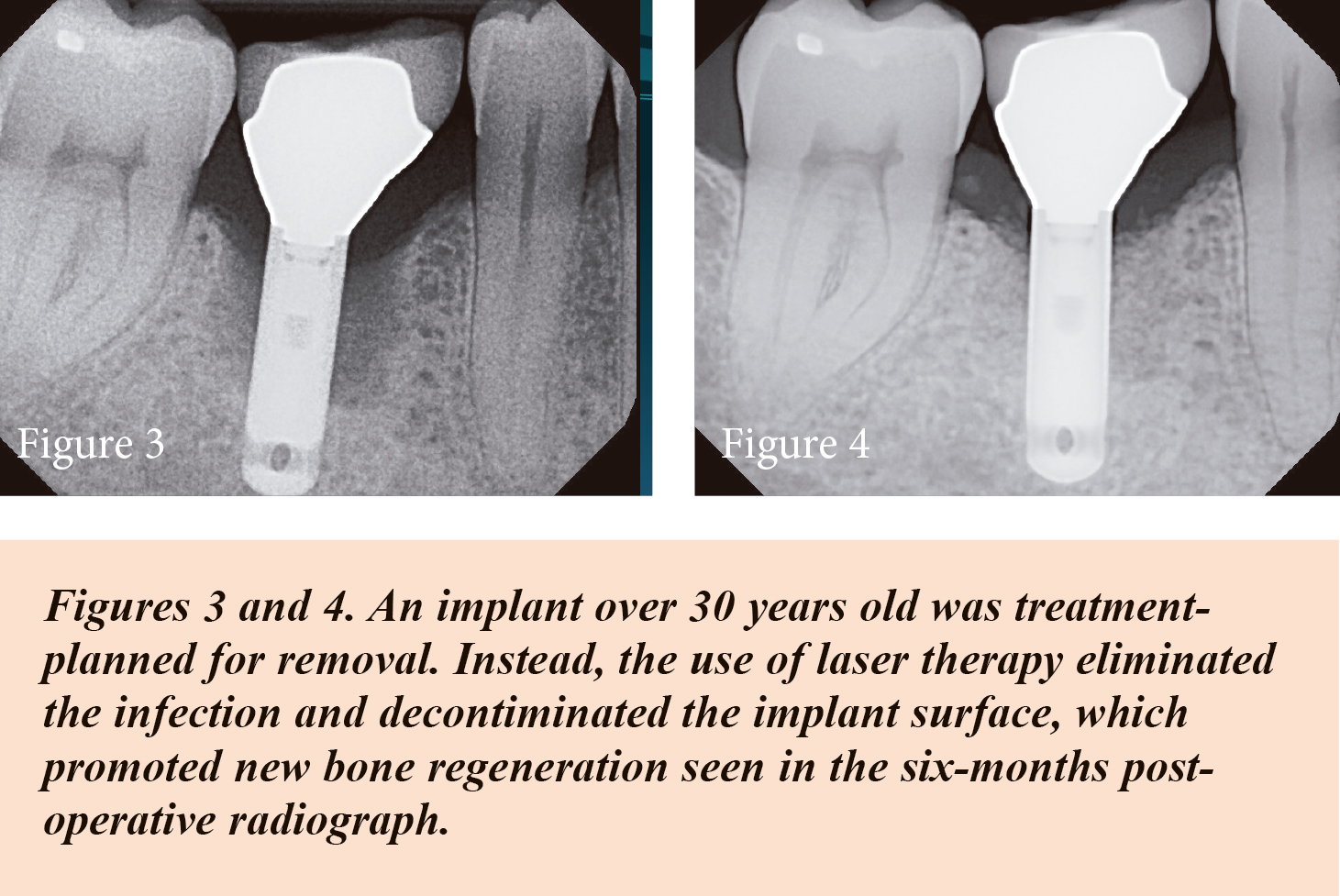
Lasers were introduced into periodontal therapy as an adjunct to address some of these limitations.
Due to their minimally-invasive nature, lasers offer patients many clinical and patient advantages:
- Reduced pain, bleeding, and post-treatment sensitivity
- Faster healing with less discomfort
- Lower risk of post-operative infection
- Tissue preservation
- Regeneration of periodontal ligaments and new bone attachment in some cases
- Twenty percent less treatment time
Lasers can reach bacteria on diseased root surfaces where conventional mechanical methods may have limited access. Studies show that laser therapy, when used together with SRP, can be more effective than SRP alone.
How Lasers Work
A reduction in pathogenic bacteria is crucial for managing periodontal disease, which is primarily caused by bacterial infection. In cases of severe attachment loss, regeneration cannot be anticipated until the underlying etiologic factors are eliminated.
Various lasers interact with tissues differently, producing ablative, bactericidal, coagulative, photobiomodulatory, and thermal effects. These features allow them to penetrate soft tissues, significantly reducing or eliminating pathogenic bacteria while leaving healthy tissue unharmed.
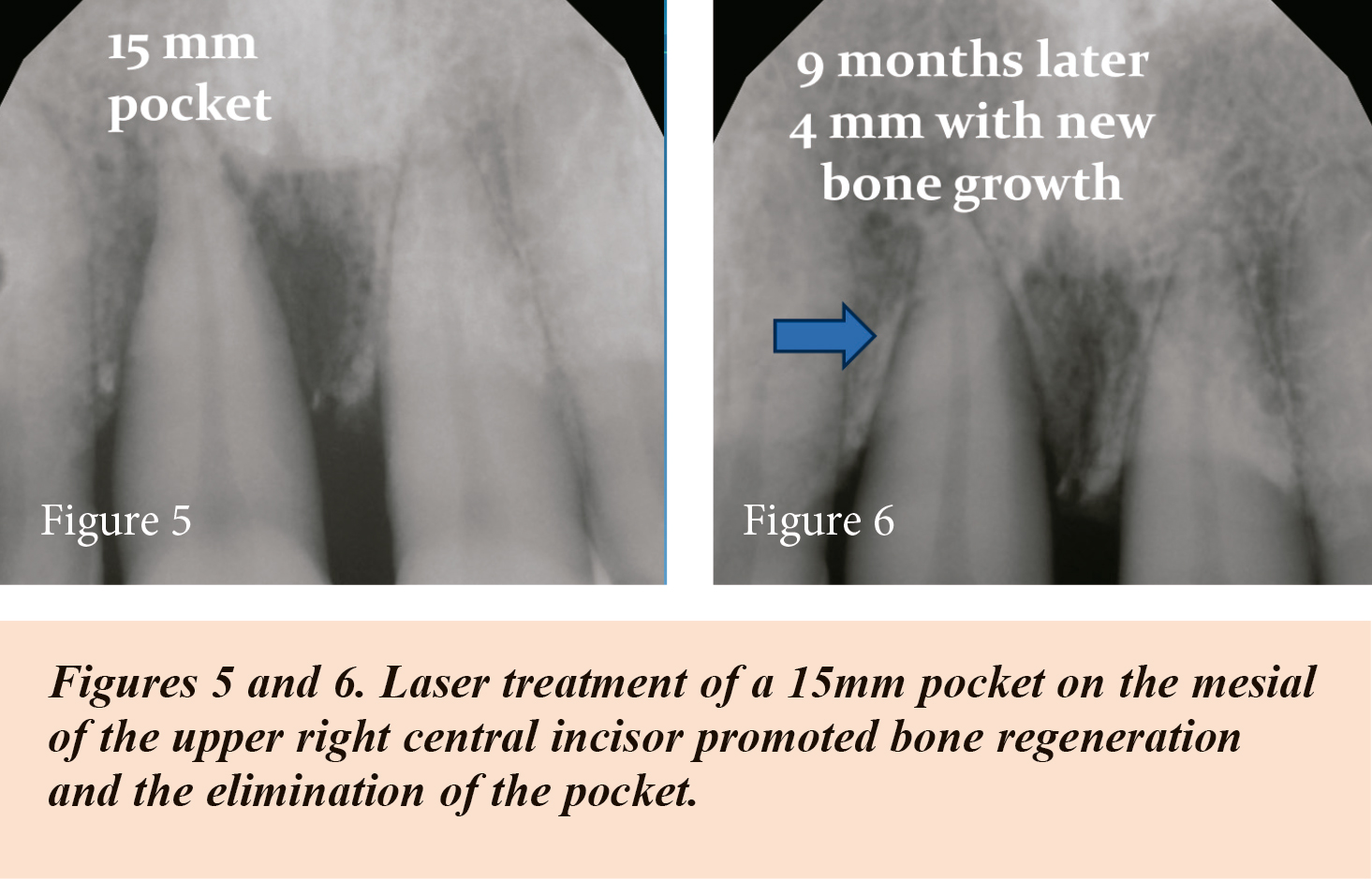
Research has shown that laser therapy also removes diseased tissue, reduces probing pocket depth, minimizes bleeding on probing, and increases clinical attachment levels by stimulating cellular function, and enhancing mitochondrial ATP production — the primary energy currency of cells.
Neodymium:Yttrium-Aluminum-Garnet lasers (Nd:YAG) penetrate deeply to control bacteria and stimulate regeneration of cementum, periodontal ligament, and supporting bone.
Erbium laser energy (Er:YAG, Er,Cr:YSGG lasers) are absorbed by water and hydroxyapatite, enabling precise ablation of soft and hard tissues with minimal thermal damage. They are ideal for calculus removal, root surface decontamination, gingival retraction, osseous contouring, and bone surgery.
They also promote healing through photobiomodulation.
Laser Periodontal Procedures
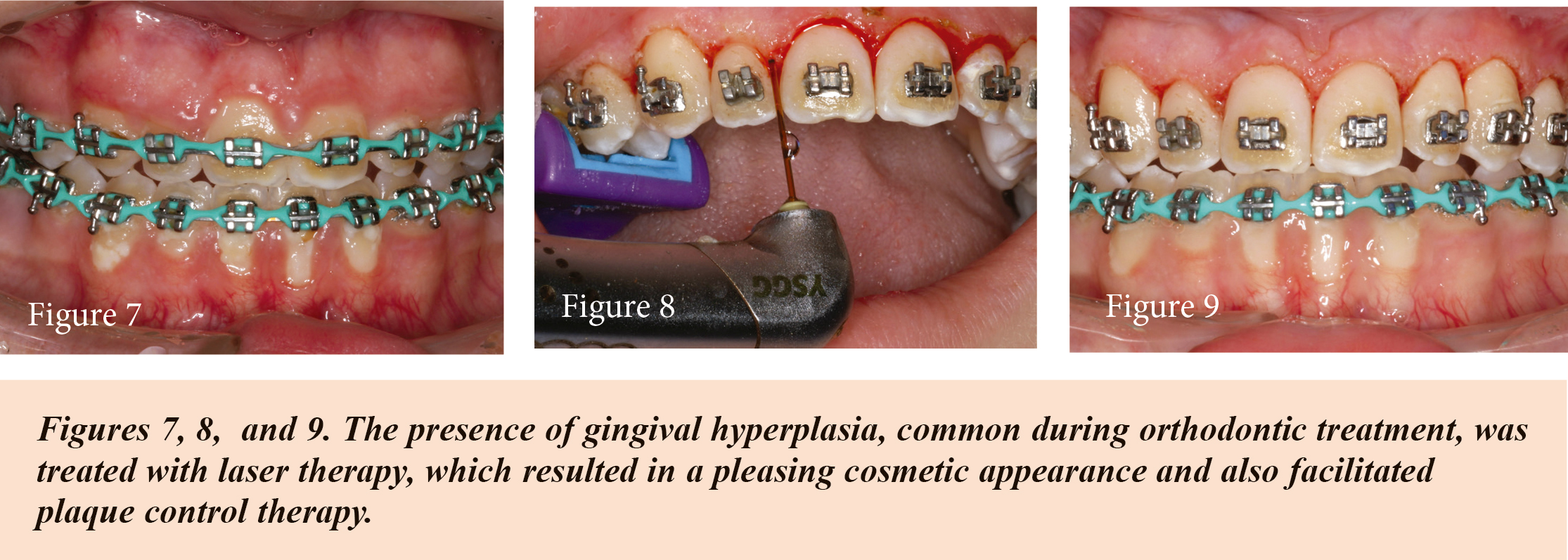
Laser periodontal procedures selectively remove diseased pocket epithelium without an incision, and without damaging the underlying connective tissue.
They promote tissue regeneration, healing more resistant to the recurrence of disease rather than the formation of a long junctional epithelium, which often results from traditional surgical procedures.
- There are no incisions, so there is usually no necessity for flap closure with sutures.
- Laser procedures are typically completed in about 20 percent less time.
- There is minimal post-treatment discomfort, swelling, or bleeding.
- The sterile environment produced by laser-light energy reduces infection risk.
- The procedure can promote new cementum and periodontal ligament growth.
- The minimally-invasive flap allows access for ostectomy or osteotomy without suturing the adjacent tissue under tension, which could lead to tearing of the tissue or necrosis.
Laser Peri-Implantitis Therapy
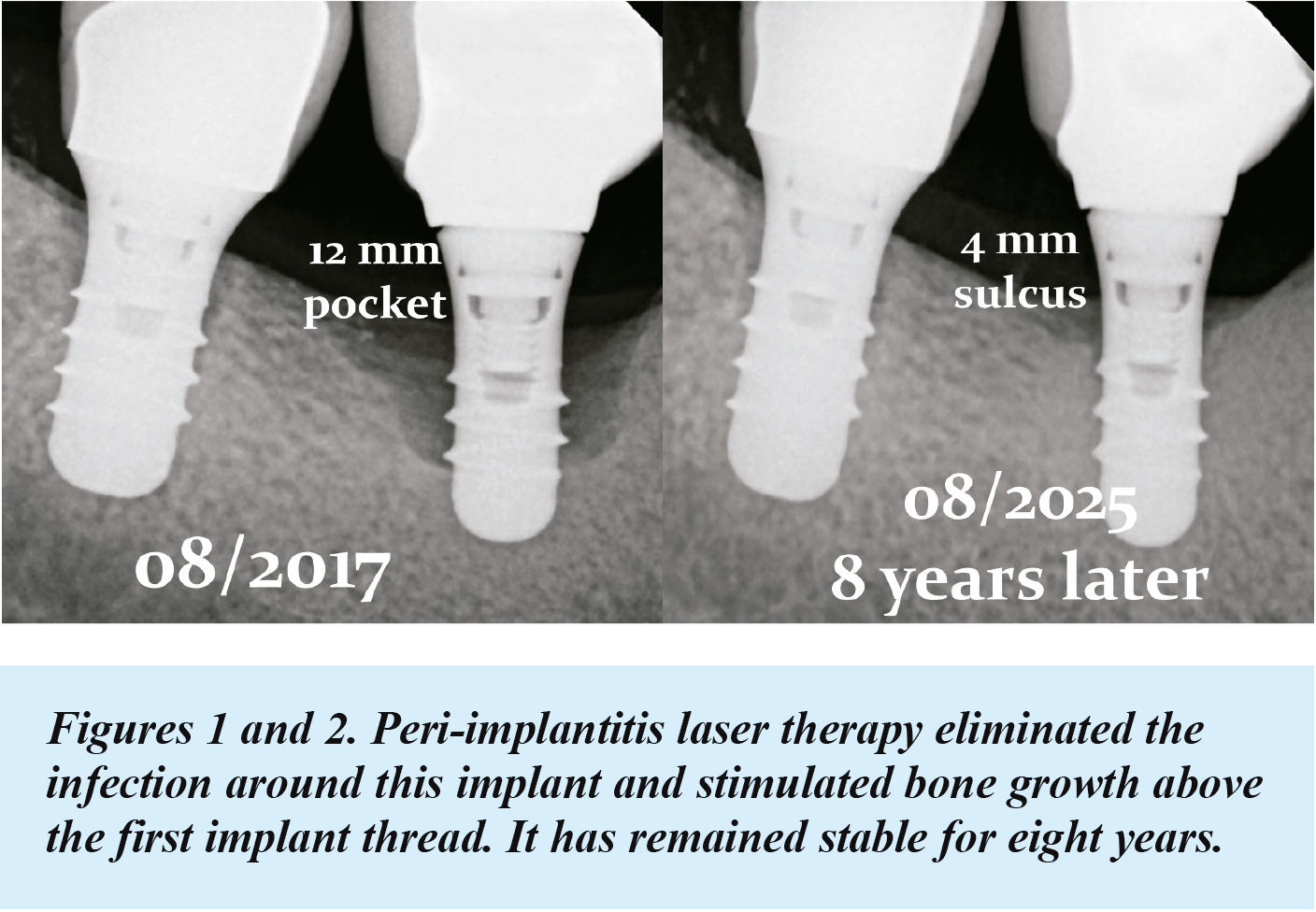
Using a laser for peri-implantitis therapy focuses on decontaminating implants and surrounding tissues, halting bone loss and promoting bone regeneration.
- Soft tissue ablation removes inflamed sulcular tissue and decontaminates the implant surface.
- Laser-induced hemostasis seals the area, preventing epithelial downgrowth.
- Some lasers can safely irradiate titanium surfaces without damaging them.
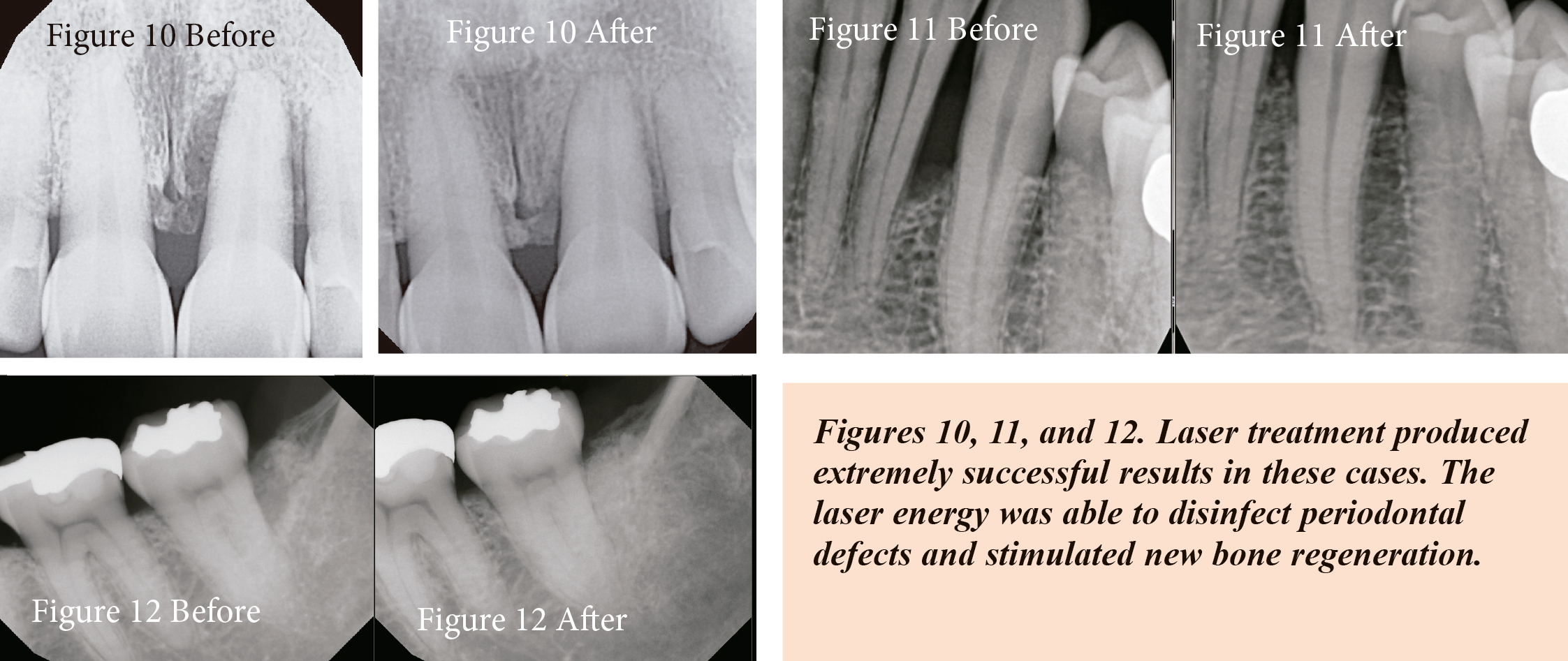
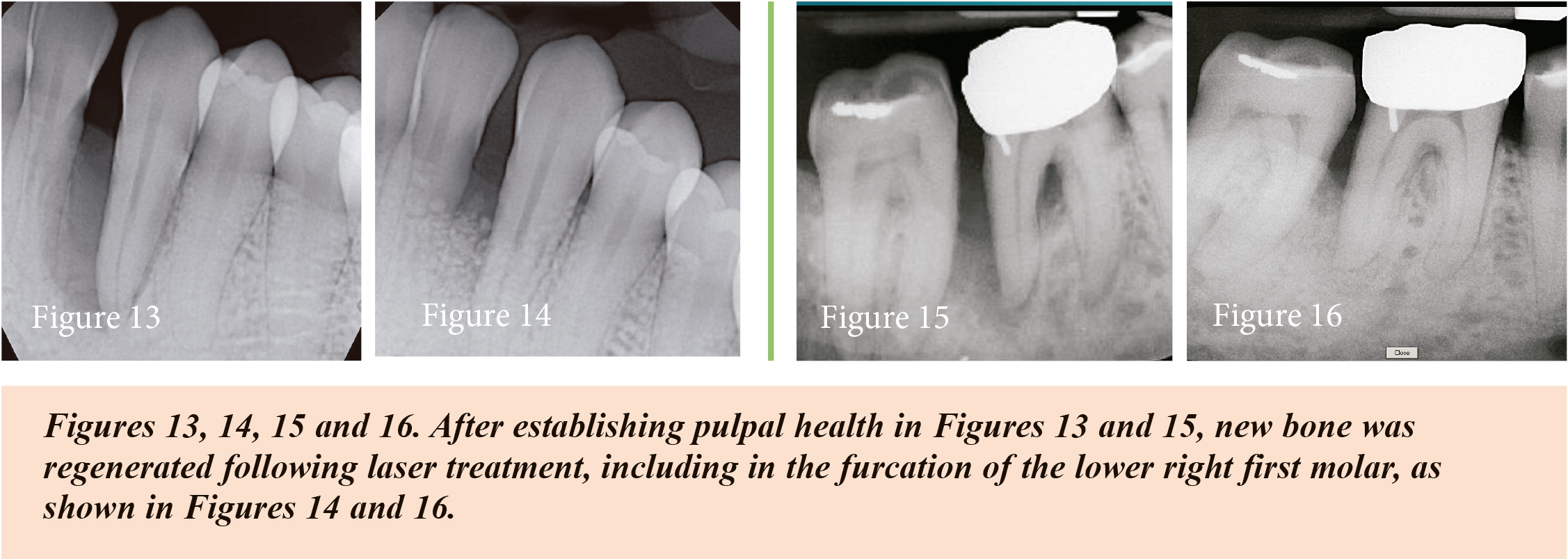
- The laser removes calcified deposits and plaque, making the decontaminated implant more biocompatible with the adjacent bone.
- Adjunctive photodynamic therapy (PDT) has been shown to disrupt pathogens, and photobiomodulation (PBM) has been shown to promote osteoblast activity and bone regeneration.
Several studies have demonstrated the effectiveness of lasers in treating peri-implant diseases:
- Yukna et al. showed 100% of teeth treated with an Nd:YAG laser formed new attachment, compared to 0% in controls.
- Nevins et al. confirmed successful outcomes for severe periodontitis.
- McCawley et al. reported complete bacterial elimination in deep pockets after using an Nd:YAG laser, whereas scaling and root planing alone left most pockets culture-positive.
- A McGuire Institute Study found the laser was as effective as open-flap procedures in reducing pocket depth and improving clinical attachment levels, with significantly better patient-reported outcomes.
- A human histologic evaluation of laser treatment for peri-implantitis published in The International Journal of Periodontics and Restorative Dentistry found evidence of new bone formation and re-osseointegration of previously contaminated implant surfaces after treatment with the Er,Cr:YSGG laser.
- The Scoping Review found evidence suggesting that the laser enhances cell proliferation and growth factor release, supporting radiographic bone regeneration and periodontal attachment gain when used as part of periodontal regenerative protocols.
While SRP and pocket-reduction surgery remain the standard of care for progressive periodontal disease, laser periodontal therapy is a safe and effective adjunct, and often an alternative, to conventional periodontal surgery and peri-implantitis treatment in selected clinical protocols, offering patients improved clinical outcomes, greater comfort and efficient treatment protocols.
Conclusion
While SRP and pocket-reduction surgery remain the standard of care for progressive periodontal disease, laser periodontal therapy is a safe and effective adjunct, and often an alternative, to conventional periodontal surgery and peri-implantitis treatment in selected clinical protocols, offering the following benefits:
- Improved clinical outcomes — periodontal health, bone growth and regeneration of attachment.
- Greater patient comfort — statistically significant reductions in post-operative bleeding, swelling and bruising.
- Efficient treatment protocols — procedures typically take 20 percent less time and require less anesthesia.
These advancements point to a future of patient-specific, minimally invasive, and technologically integrated laser periodontal therapy.