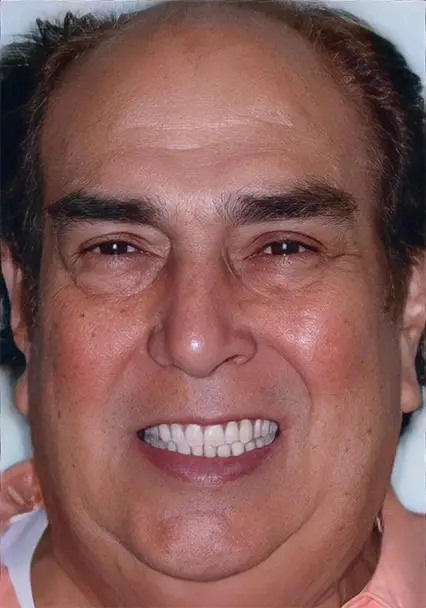
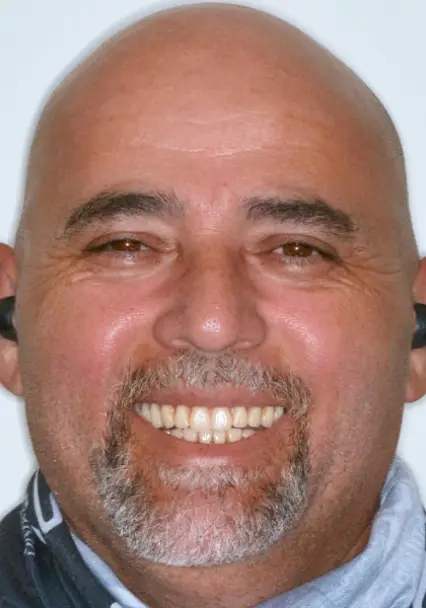
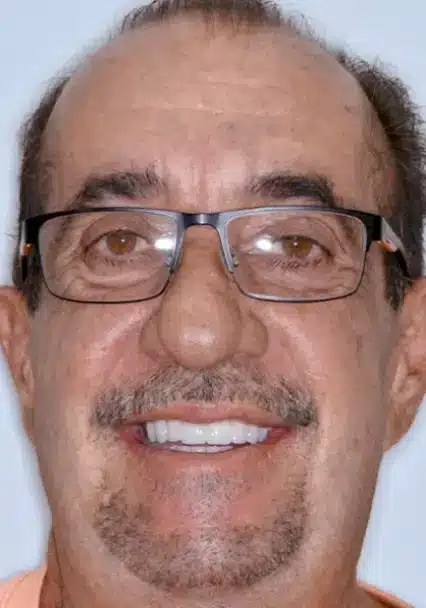
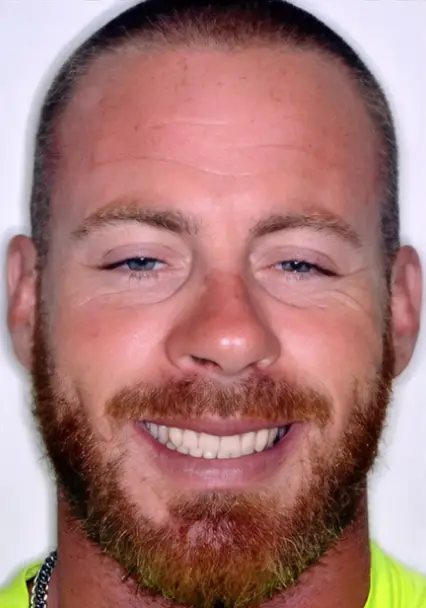
As seen in
el Nuevo Herald
 
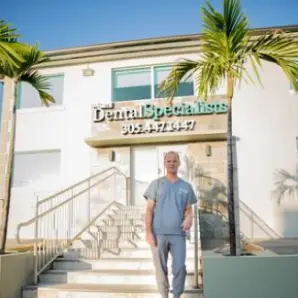
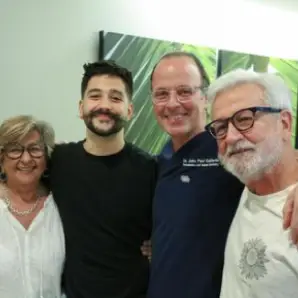
Dr. Gallardo & Dr. Lamas
featured in the current
Miami Luxury Magazine


Dr. Gallardo
John Paul Gallardo, D.D.S., P.A. attended University of Miami. Immediately following, he was granted advanced early acceptance to New York University College of Dentistry and graduated with a D.D.S. degree in 1991. He was then one of four doctors accepted to the V.A Medical Center General Practice Residency Program where he was honored with the "Outstanding Resident of the Year" Award. read more


Dr. Lamas
William P. Lamas, D.M.D., M.S., P.A. completed his college education at Barry University with a Bachelor of Science degree. He continued his studies at the University of Florida College of Dentistry, where he earned the degree Doctor of Dental Medicine. Upon graduation, he received the American Academy of Periodontology Student Achievement Award, which is the highest honor given by the Academy to a graduating dental student. read more

FDA approved Laser reverses Gum Disease
Laser Assisted New Attachment Procedure or LANAP

Drs Gallardo and Lamas are proud to announce that the PerioLase Laser has arrived in the City of Miami.  Similar to what LASIK did for eye problems, this patented and FDA cleared laser therapy allows us to treat periodontal patients with a minimally invasive breakthrough procedure. For the first time, Laser Periodontal Therapy™ is available for our patients otherwise facing gum surgery for periodontal disease.

If you're like millions of other Americans, you could be one of more than 75% of Americans who have periodontal disease, the major cause of tooth loss in adults.  Until now, that meant surgery and sutures. But today, our office offers  LANAP™.   You can feel confident knowing Drs Gallardo and Lamas continue to have world-class technology and care.

Learn more about LANAP

If you're facing surgery for periodontal disease, call 305.447.1447
for more information about LANAP™

Procedure Spotlight

Dental Implants - These are teeth that look and feel just like your own! When a tooth is lost, it's best to replace it with an implant as promptly as possible. After tooth loss, the load on each remaining tooth is increased because there are fewer of them. To restore proper chewing ability, the support lost from the missing tooth needs to be increased.

To compare chewing efficiency, let's assume a patient with all his or her natural teeth can chew at 100 percent efficiency. With every tooth that is lost, the amount of chewing efficiency decrease depends on whether or not the teeth are replaced and how. Ultimately, if all teeth are lost, the patient will have perhaps a 15 to 18 percent chewing efficiency (even with good-fitting dentures on adequate bony ridges).

Dental implants are designed to provide a foundation for replacement teeth that look, feel, and function like natural teeth. The person who has lost teeth regains the ability to eat virtually anything and can smile with confidence, knowing that teeth appear natural and that facial contours are preserved.

Read more about dental implants.

 
PATIENT NEWSLETTERS
 
 
Is it Time to See a Periodontist?
Dec 2009

If you have been experiencing symptoms of periodontal disease, including red, swollen or tender gums or other pain in your mouth, bleeding while brushing your teeth, persistent bad breath, or a change in the way your teeth fit together when you bite, it may be a good idea to schedule an appointment with a periodontist. However, you may be wondering "What exactly is periodontal disease?" and "Why is it a good idea to see a periodontist for treatment options?" These are common questions, and their answers are important!.
continue


My toothbrush can help my diabetes? Diabetes and Periodontal Disease
Nov 2009

You are probably aware of the major risk factors for diabetes, including genetics, obesity and high blood pressure. However, what you may not realize is that periodontal health is also associated wi th diabetes. Periodontal disease is a chronic inflammatory disease that affects the gums and bone supporting the teeth, and has been associated with the progression of other diseases such as cardiovascular disease and diabetes.
continue


Periodontal Disease in Children and Adolescents
Sept 2009

Periodontal disease is often thought of as a consequence of aging, or an adult problem. But, did you know that gingivitis, a mild form of periodontitis, is often found in both chi ldren and adoles cent s? Additionally, research shows that more advanced, harmful forms of the disease can occur in younger age groups. The good news is that a little education and a few easy steps go a long way toward preventing periodontal disease.
continue


Working Together for Healthy Gums and a Healthy Heart
July 2009

Gum disease and cardiovascular disease are both major public health issues that impact a large number of Americans every day. While these two diseases impact separate areas of the body, research indi cates that periodontal disease and cardiovascular disease are connected; having one disease may actually increase your risk of developing the other.
Inflammation's Role.- Periodontal disease and cardiovascular disease are both considered chronic inflammatory conditions. Inflammation is the body's instinctive reaction to fight off infection. Inflammation is initially good for your body because it helps in the healing process. However, chronic and prolonged inflammation can lead to severe health complications.
continue


Maintaining Oral Health During Cancer Therapy
June 2009

Cancer therapy can cause oral complications that compromise periodontal health, so a visit to your periodontist is important to help keep your gums healthy during this difficult time.
Oral Complications.- Common side effects of cancer treatments such as chemotherapy, radiation to the head and neck, and bone marrow transplantation can negatively impact your overall health and quality of life. Radiation and chemotherapy kill cancer cells, but they can also hurt normal cells.
continue


Brush and Floss for Healthy Gums!
April 2009

One of the easiest ways to help prevent gum disease is to brush and floss every day, so therefore it is very important to know the correct way to take care of your teeth and gums. It does not matter if you brush first or floss first, as long as you do both (twice a day!).
Equipment.- The most commonly used toothbrush is the manual toothbrush. Another option is the electric toothbrush, which uses electrical power to move the brush head. The resulting vibrations that are created gently clean the teeth. It is important to always choose a soft brush head when using either a manual or electric toothbrush, and to replace the toothbrush when the bristles begin to bend (or every two to three months).
continue


BLOG  

Posted February 24, 2010 5:12 AM in Uncategorized
by DR. JOHN PAUL GALLARDO

Babies, even babies of parents with periodontal disease are born pathogen-free and yet, some 90% of adults suffer from gingivitis. Therefore, at some point, they become infected but from where? The bacteria or germs that exist in the crevice or pockets between the teeth and gums are found nowhere else but in an infected person. Therefore periodontal diseases are contagious as saliva is shared through kissing, sneezing, shared utensils etc. Since most people have some form of gum disease but don’t know it, these If this is all true why bother with treatment if they’re going to reacquire the infection anyway. The reason is that, just like the common cold, not everyone will catch it that is exposed to it. 1. The bacteria need an environment in the mouth conducive to growth such as someone: -Who has poor oral hygiene -Who has crowns or bridges or other types of extensive work in their... continue

Add Comment | Permalink


Posted February 24, 2010 5:08 AM in Uncategorized
by DR. JOHN PAUL GALLARDO

Most patients we speak with are not happy with their mandibular or “bottom” dentures. The children of elderly parents assume that their mothers and fathers have accepted their “plates” since they don’t seem to complain. Many tell us that their parents dental health condition is just a sign of the times and places they grew up in. Unfortunately they dont know any better! The widespread use of denture cream is one indication that these prostheses are inadequate for many denture wearers. Our patients that come in wearing conventional dentures claim that they cannot eat many foods, particular those that are hard or tough. This forces them to change their eating habits in unhealthy ways and in turn creates nutritional patterns that are poorer than that of people with natural teeth. In an article written in The Miami Herald dated February 19, 2010, Poligrip denture cream accounted for more... continue

Add Comment | Permalink

View more blog posts

 
Sedation Dentistry Tissue Regeneration & Gum Recession Periodontal Surgery Non Surgical Treatments Periodontics & Cosmetic Dentistry Implants & Bridges Full Replacement Single Tooth Replacement Implant Dentistry Miami Perio Homepage Dr. Gallaardo Dr. Lamas Implant Dentistry Periodontics & Cosmetic Dentistry Sedation Dentistry Patient Photos Just for Patients About Us For Dental Professionals Map & Directions Email Us Miami Periodontics and Implant Dentistry